About NURS-FPX4035 Assessment 2
This NURS-FPX4035 Assessment 2 sample models a root-cause analysis and safety improvement plan for a fictional inpatient fall. It reconstructs the event, examines patient, workflow, communication, and environmental contributors, and connects the findings to a feasible fall-prevention plan, organizational resources, and measures.
Course context: view the NURS-FPX4035 course hub for the course overview and published assessments.
Root-Cause Analysis and Improvement-Plan Structure
This sample systematically evaluates a sentinel event and proposes actionable systemic improvements. It is organized around the following sections:
Event Chronology and Immediate Response: Reconstructs the timeline from the evening handoff at 18:45 to the unassisted fall at 02:15, isolating missed clinical risks and removed defenses.
Root-Cause Analysis (Five-Whys): Connects the immediate cause (unassisted transfer) to the root system failure (treating fall prevention as a generic score rather than an individualized plan).
Contributing Factors Matrix: Rates the relative contribution of dynamic clinical risks, missing reassessments, alarm/call-light failures, and workload variables.
SAFE Toileting and Mobility Improvement Plan: Outlines six core actions: Screen and reassess, align tailored bedside plans, facilitate safe mobility, engage patient/family, communicate/escalate, and learn from events.
Implementation, Measurement, and Sustainability: Details a four-phase rollout plan over six months and establishes strict metrics to prevent the reduction of falls from overloading staff or restricting mobility.
Patient Fall Root-Cause Analysis and Evidence-Based Safety Strategies
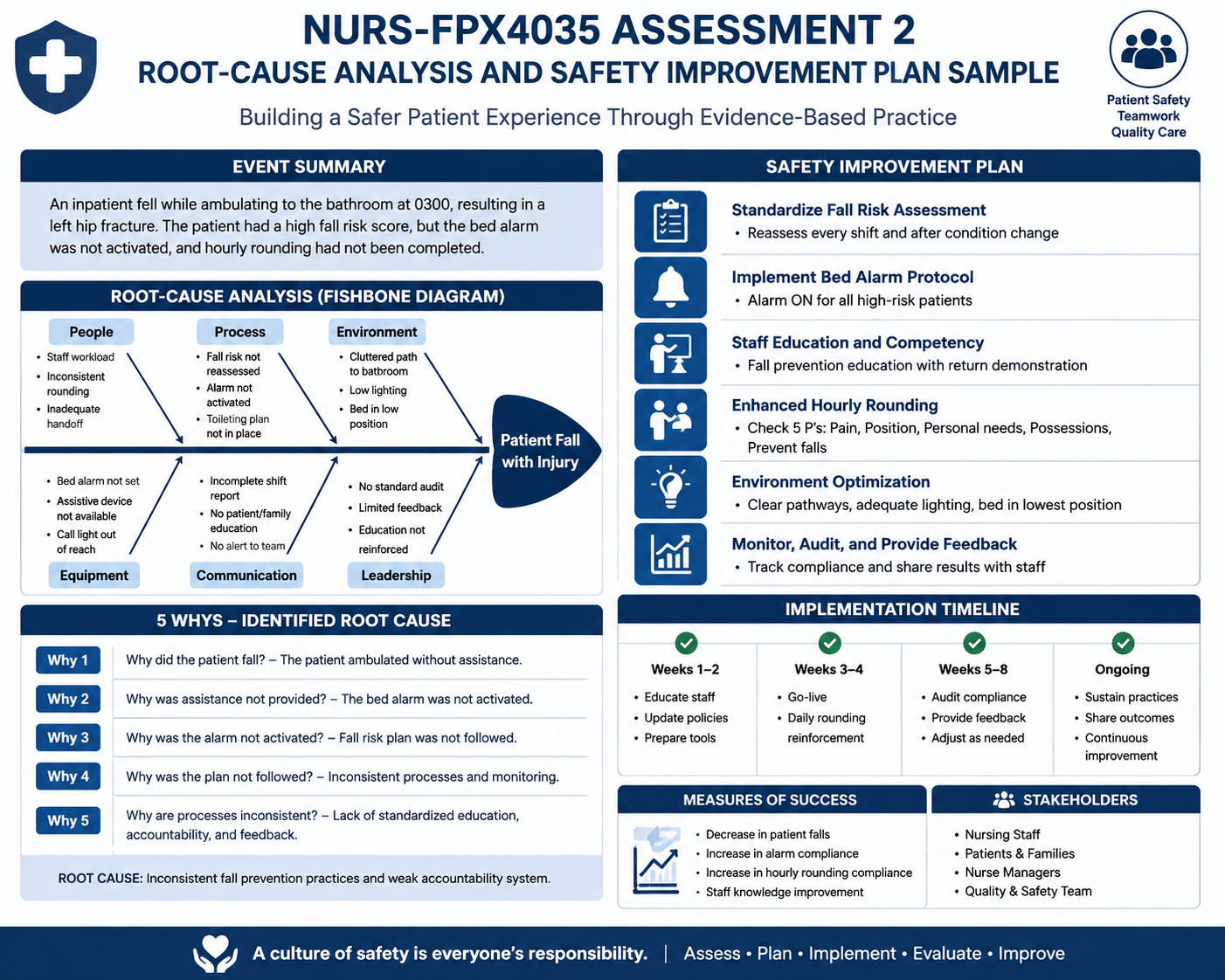
Root-Cause Analysis and Planning Steps
Use these steps to review the sample and plan an original root-cause analysis:
Analyze the root causes of a specific safety event by establishing a detailed event chronology and utilizing a five-whys inquiry.
Identify the specific human, process, communication, and environmental factors contributing to the event using a contributing-factor matrix.
Apply best-practice, evidence-based strategies—such as the Fall TIPS toolkit and TeamSTEPPS communication frameworks—to address the identified system failures.
Create a feasible, multiphase improvement plan that names specific owners, targets, and execution steps (e.g., a 30-day preparation phase and a 60-day pilot on 8 beds).
Leverage existing organizational resources, prioritizing tools like the electronic health record (EHR) and incident-reporting systems for maximum impact.
Define precise outcome measures (e.g., a 30% reduction in total falls), process measures (e.g., teach-back success), and balancing measures (e.g., staff overtime).
Educational Support and Resource Integration
Assessment hierarchy
- NURS-FPX4035 course hub — course overview and published assessments.
- Nursing & Health Sciences sample collection — lateral browsing across the wider program area.
Supporting guides for evidence and implementation
- BSN Patient Safety Assignment Guide Connects the identified fall problem and contributing factors to evidence-based interventions, stakeholder roles, and measurable safety outcomes.
- How to Write a BSN Evidence-Based Practice Paper Supports appraisal and synthesis of evidence used to justify the proposed safety strategies and resource choices.
- 9 Steps to Plan a Capella Nursing Change Proposal Helps organize implementation phases, stakeholder responsibilities, workflow changes, barriers, and sustainability measures.
- How to Find Recent Nursing Research for an Assessment Provides a structured approach to locating recent, relevant evidence for the root-cause analysis and improvement plan.
- 10 Steps to Track Evidence for Every Rubric Criterion Helps check that the event analysis, evidence, plan, resources, and measures address the current assessment criteria.
- Next: Assessment 3 Improvement Plan In-Service Presentation Sample Use this guide for the specific method, evidence need, or revision step indicated by its topic.
Use these guides to check the connection among the event chronology, root-cause findings, selected evidence, improvement actions, organizational resources, and measures. Compare the completed work with the current course instructions and scoring guide before submission.
Frequently asked questions
What does this NURS-FPX4035 Assessment 2 sample demonstrate?
It demonstrates an event chronology, five-whys inquiry, contributing-factor analysis, and a safety improvement plan for a fictional inpatient fall.
How do the chronology and root-cause analysis work together?
The chronology establishes what happened and when. The root-cause analysis then examines why safeguards failed across patient, task, communication, staffing, equipment, and environmental conditions.
What makes the improvement plan measurable?
Connect each action to an owner, implementation step, organizational resource, and suitable outcome, process, or balancing measure. Use targets only when they are supported by the scenario or current instructions.
Can I submit this sample as my own assessment?
No. Use it only as a learning model. Develop an original safety case and analysis, select appropriate evidence, cite borrowed ideas, and follow the current courseroom instructions and scoring guide.
Study and academic-use guidance
Use this sample to study structure, evidence relationships, analytical sequencing, and scoring-guide alignment. Build your own response from the current courseroom requirements.
- Verify the current instructions, template, evidence requirements, and scoring guide.
- Create your own analysis, calculations, visuals, citations, and conclusions.
- Check factual, clinical, legal, numerical, and source claims before submission.
Independent resource: FlexPath Assignment Help is not affiliated with or endorsed by Capella University. Do not submit sample wording or analysis as your own work.